
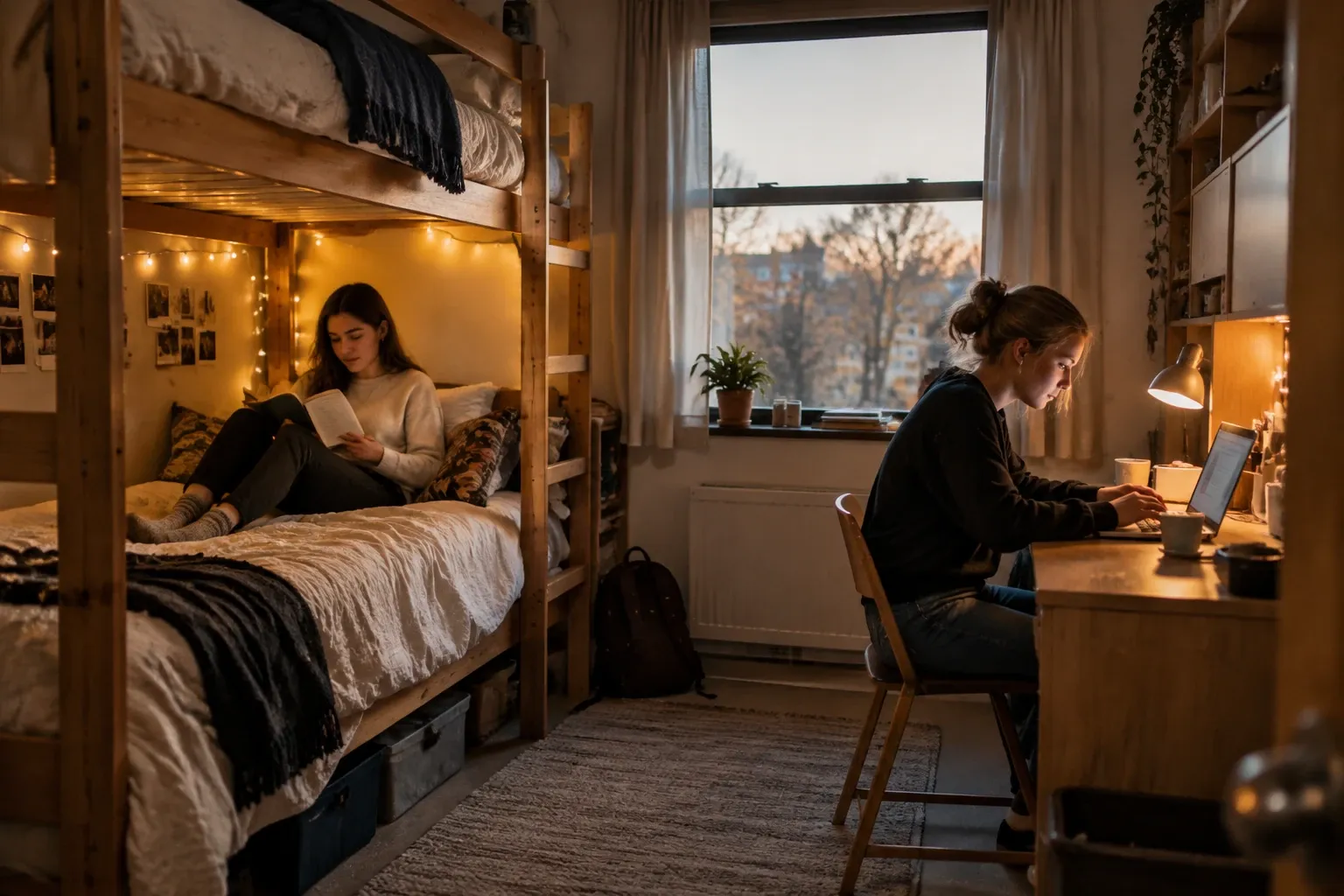
Moving into a residence hall is exciting and weird at the same time: you’re building a new routine in a small space with a stranger, under rules you didn’t write. The good news is that dorms are designed for first‑years to find their footing fast. Below you’ll find what day‑to‑day life actually feels like, the criteria that matter when you pick a hall, trade‑offs between options, and the practical steps—from health paperwork to insurance and packing—that help you settle in. For broader context on U.S. campus living, see how daily campus life works.
What day‑to‑day dorm life actually looks like
- You’ll see student staff around: Resident Assistants (RAs) are trained peers who build community, connect you to resources and enforce policies; their national association, ACUHO‑I, even publishes foundational RA training on policy, ethics and support skills (ACUHO‑I).
- Most halls set community quiet hours (times vary by campus) and 24/7 courtesy hours so people can sleep and study. Expect guest rules, sign‑in procedures and limits on overnight stays.
- Bathrooms can be communal or suite‑style; floors are often single‑gender or mixed‑gender. Common rooms, study lounges and laundry rooms are shared.
- You’ll swipe into your building; propped‑open doors or tailgating strangers in is a no‑go. Report maintenance issues early—facilities teams fix things faster when tickets are specific.
What to look for when you pick a hall
- Location: distance to your most frequent lecture buildings, dining halls and late‑night study spots.
- Room type: double, triple or (rare) single; loftability; storage.
- Bathroom setup: communal vs. suite, and cleaning responsibility.
- Noise profile: near social hubs vs. quieter edges of campus.
- Living‑learning or themed communities: great for built‑in friends and study habits if they match your interests.
- Climate control: does the building have A/C, fans only, or heating quirks?
- Security basics: staffed front desk, keycard access, cameras.
- Total cost: room + required meal plan. As a ballpark, analysts estimate average room and board around $14,398 in 2025–26 across U.S. institutions, though your number can be higher or lower depending on campus and plan (EducationData.org). Use that range when sketching a realistic student budget.
Dorms vs. other first‑year housing options
- On‑campus dorms: closest to classes and support (RAs, tutoring, events). Rules and space are tighter, but the community is strong—ideal for your first year.
- Off‑campus rentals: more freedom and privacy, but longer commutes, separate leases and you’ll need to manage utilities, cooking and safety. Many first‑years wait until year two.
- Greek chapter facilities: some campuses offer sorority/fraternity housing with extra expectations and fees; if you’re curious about the trade‑offs, see our take on Greek life decisions.
Putting your choice into practice: move‑in to month one
- Health forms and vaccines
- Check your school’s immunization requirements well before arrival. U.S. public health guidance highlights an increased meningococcal risk among first‑year students in residence halls; the CDC recommends they have at least one MenACWY dose within five years of entry (CDC clinical overview).
- Insurance check
- If you live in a dorm and are still part of your parents’ household, many homeowners or renters policies extend “off‑premises” coverage to your belongings—but limits can be lower. Confirm what’s covered and consider your own renters policy if the cap wouldn’t replace your laptop, bike and essentials (Insurance Information Institute; see also the III’s college‑specific guidance here).
- Pack for safety and space
- Most campuses prohibit open flames and many heat‑producing appliances in rooms (think candles and hot plates). Federal fire‑safety agencies flag candles and improper appliance use as common dorm fire hazards; always check your campus list before buying gear (U.S. Fire Administration).
- Coordinate with your roommate on shared items (fridge, rug, cleaning kit) to avoid duplicates.
- Roommate expectations
- Early, honest conversations beat passive‑aggressive Post‑its. Many housing offices ask you to fill out a roommate agreement at move‑in to set norms on guests, noise, cleanliness and borrowing; your RA can mediate if needed. Keep a copy and revisit it after the first midterms.
- Know the help menu
- Save your RA’s phone number, the on‑call desk, counseling center, campus police non‑emergency line and facilities request portal. If something feels off (safety, wellness, harassment), tell staff—residence life is built to respond.
How to tell it’s working—and how to adjust
- Your sleep and study are protected most nights. If noise creeps up, use the social route first (a friendly knock), then ask your RA to help reset floor norms.
- You’re using shared spaces without dread. If you avoid lounges or bathrooms because of mess or behavior, loop in staff early; patterns are easier to fix than one‑offs.
- Your budget matches reality. If your meal plan is too big or too small, note usage patterns—most schools let you adjust next term. Keep receipts for one month to see where campus “little spends” (coffee, late‑night snacks) add up against your plan.
- You feel connected to at least one group (hall event crew, intramural team, cultural org). Dorms supply easy on‑ramps; pick one and show up twice.
Dorms concentrate the best parts of campus—people, support and surprise conversations—into one building. Go in with clear expectations and a few practical safeguards, and you’ll give yourself room to grow academically and personally your first year.
In this section Student Life in the USA